
Healing on the Land: Between EMDR, Psilocybin, and the Wisdom of Aotearoa
Written by Kathryn McMaster
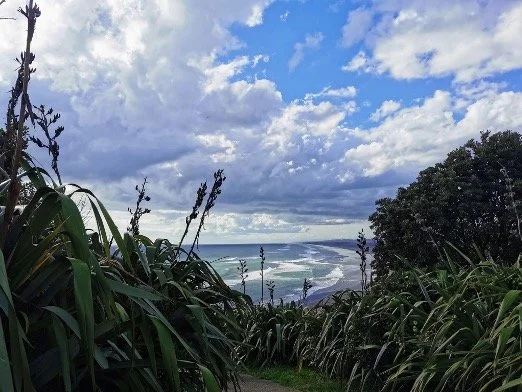
Here in Aotearoa New Zealand, even when therapy happens indoors, I am aware of the land—its hills, waters, and native bush stretching far beyond the walls. When I work with clients at Muriwai on the West Coast, that presence becomes unmistakable. The ocean roars, the wind moves through the dunes, and the land feels alive beneath us. In those moments, accompanying someone through grief, trauma, or memories once too painful to touch, the whenua feels like a quiet companion—steady, spacious, and grounding. Between tears and breath, it is as if the land exhales with us, reminding both client and therapist that healing is possible.
EMDR and psilocybin-assisted therapy may appear to come from opposite worlds—one shaped by the precision of clinical psychology, the other emerging from ancient ritual and re-entering modern science. Yet in my practice, and in my own healing, I’ve sensed a quiet resonance between them. Working in Aotearoa deepens that resonance. It asks me to honour the land and its people, to approach both with humility, and to remember that healing is not only a psychological process but a relational one—held between people, between histories, and between ourselves and the land beneath our feet.
For the past several years, I have worked as an Attachment-Focused EMDR therapist. Each session offers the privilege of witnessing people step into the tender terrain of memory and emotion—returning to places that once felt unbearable. I have watched bodies soften, breath steady, and stories reshape themselves. What emerges is not an erasure of the past, but a renewed relationship with it: lighter, kinder, more whole. I also know EMDR from the other side of the chair. I have followed the rhythmic pulse of a therapist’s tappers, felt images and sensations rise and fall like waves, and experienced the quiet relief that comes when a painful memory no longer holds its grip.
In recent years, I have been attending psilocybin retreats, all held with careful guidance in spaces of reverence and safety. Across these journeys, I noticed a striking resonance with EMDR: emotions that had once felt too sharp to contact surfaced fully, reorganized themselves, and left a profound sense of release and clarity. Even in these sessions, the depth of insight and emotional processing has been extraordinary, inspiring an ongoing curiosity about how these two very different pathways might converge to support healing.
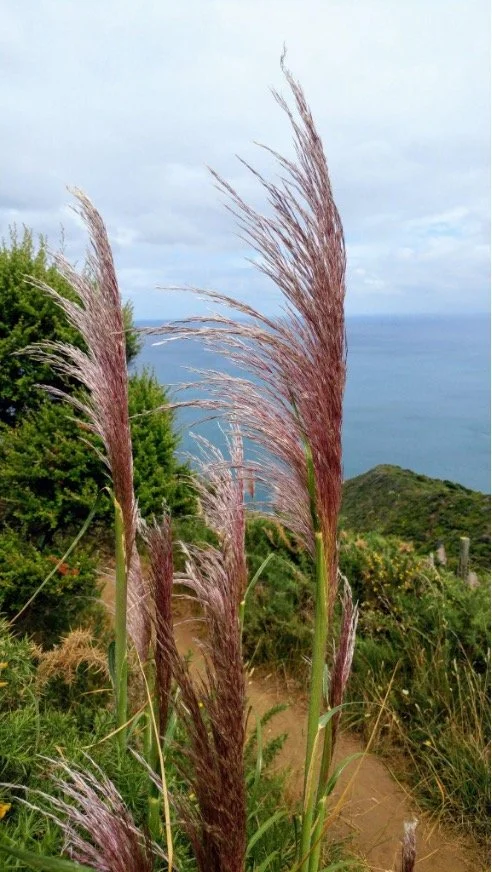
Across the world, more and more EMDR therapists are exploring psychedelics as companions to trauma work. Some participate in research, others bring insights from their own journeys. Here in Aotearoa, that work feels especially sacred: to use medicine from this land while being present to the land itself, seeing its mountains, rivers, iwi—it is a reminder that healing is not only psychological, but ecological and ancestral. The land, the medicine, the therapist, and the client become part of the same living system of healing—each informing, supporting, and witnessing the other.
Both EMDR and psilocybin therapy create conditions for what is stuck to move again. They soften rigidity, invite new meaning, and allow the release of long-held emotion. In both, the presence of a safe, attuned other—a therapist, a guide, a compassionate witness—makes the journey possible. EMDR follows a reliable protocol; psilocybin journeys unfold according to the mystery of the psyche and the medicine. Still, I often find myself—alongside many other clinicians, researchers, and seekers—wondering how these two pathways might speak to one another. Could psilocybin gently open doors to memories that EMDR then helps reorganize? Could EMDR offer a grounded framework for integrating the insights that arise through psychedelic work? Could healing unfold through a rhythm that moves between the two?
Imagining EMDR and Psychedelics Together in Aotearoa
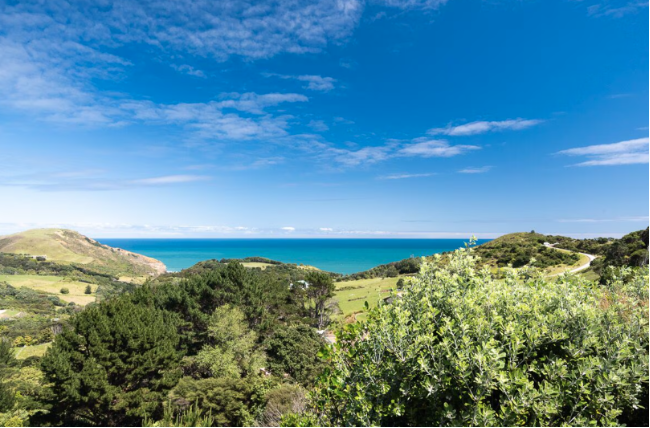
I often imagine retreat spaces in Aotearoa where EMDR and psilocybin-assisted therapy coexist—spaces designed to be safe, accessible, and guided by multiple sources of wisdom. Participants could engage in trauma processing while being supported by practitioners attuned to both clinical expertise and the cultural knowledge of the land’s people. In these spaces, the medicine would come not only from the psilocybin itself, but from the living whenua—its hills, oceans, trees, earth—woven into the experience in ways that honour both the land and the participants’ inner journeys.
In this vision, EMDR and psychedelics are married with the land—in the service of healing. These modalities, guided by presence and reverence, could offer people something we are all yearning for in this world: connection. Connection to ourselves, to others, and to the land that holds us. When we remember this connection, healing doesn’t just stay within us—it spreads. It ripples outward, softening the spaces between us, reminding us of our shared humanity and our shared home.
The world is aching for this kind of healing right now. Amid disconnection, fear, and fragmentation, the land continues to remind us of what endures: cycles of renewal, belonging, and relationship. And as many of us explore these pathways, we’re discovering that healing is less about erasing what was and more about remembering who we are when the past no longer defines us.
In my practice—and in my own journey—I’ve come to see EMDR, psilocybin, and the land of Aotearoa as different doorways into the same homeplace of healing. The whenua reminds us that loss and renewal are inseparable, that beauty and pain can move through the same landscape, and that even after deep rupture, life returns. And woven through all of it is a profound respect for the land and its people, whose wisdom teaches that healing is never done alone. It is held, always, by something greater.
Bio: Kathryn McMaster is a registered psychologist practising in Auckland, Aotearoa New Zealand, and Alberta, Canada. She specialises in trauma-focused therapy, drawing on her clinical psychology background and a deep respect for the natural world, connection, and expanded states of awareness. Her work centres on helping people reclaim their stories with compassion, curiosity, and evidence-based care.